Can Your Pillow Cause Neck Pain? How to Tell

You reach for the alarm and your neck files a formal objection — a stiff, one-sided ache that makes you rotate your whole torso just to read the clock. So, can a pillow cause neck pain? Yes. A pillow that holds your neck at the wrong angle for six to eight hours a night can absolutely be the cause — though it is not the only one. We may earn a commission from links on this page, at no extra cost to you.
This article is the diagnostic step that should come before any shopping trip. Below, we walk through the signs that point squarely at the thing under your head, the signs that point somewhere else, and a two-minute self-check you can run tonight. If your pillow flunks, our full guide to choosing a pillow for neck pain covers replacements in depth — but most people can settle the "is it my pillow?" question right here, for free.
Yes, a Pillow Can Cause Neck Pain — Here Is How
Your cervical spine has a natural forward curve, and a pillow has exactly one job: hold that curve in a neutral position — head level with the spine — while your neck muscles clock out for the night. When the pillow is too tall, too flat, or too dead to hold its shape, your neck spends the night flexed, extended, or tilted sideways, loading muscles and joints for hours at an angle they were never meant to hold that long.
This is not just intuition. Harvard Health warns against a pillow that is too high or too stiff, because it keeps the neck flexed overnight and can produce exactly the morning pain and stiffness we are talking about. The effect is measurable: a biomechanics study published in the journal PeerJ found that raising pillow height from about 11 cm to 17 cm increased the angle of the cervical spine by 66 percent and significantly increased pressure in the head and neck regions. And the Cleveland Clinic notes plainly that sleeping on the wrong pillow can cause neck pain or make existing pain worse.
There is an encouraging flip side. A 2023 study in the Journal of Physical Therapy Science reported that participants' neck pain and related somatic symptoms improved after their pillow heights were adjusted to fit them — evidence that the pillow-pain relationship runs in both directions.
One honest caveat before we go further: a pillow is one cause among several. Mattresses, desk posture, stress, old injuries, and arthritis all produce neck pain too, which is why the self-check below matters more than any product recommendation.
Signs Your Pillow Is Causing Your Neck Pain
Neck pain due to a pillow usually follows a mechanical pattern, and the pattern tells the story. The more of these that sound familiar, the more suspicion shifts to your pillow:
- The pain is worst the moment you wake and tends to fade within 30 to 60 minutes. Pain that peaks at 6 a.m. and loosens once you have moved around points to something happening overnight, not to disease. For reference, Spine-health notes that a stiff neck after sleeping typically resolves within a few days to a week — so if yours resets every single morning for weeks, something in your sleep setup is likely recreating it nightly.
- The pain arrived with a change. A new pillow, a new mattress, a week of hotel beds, or a red-eye spent folded against a window. If you can date the ache to a change in what is under your head, you have a lead suspect.
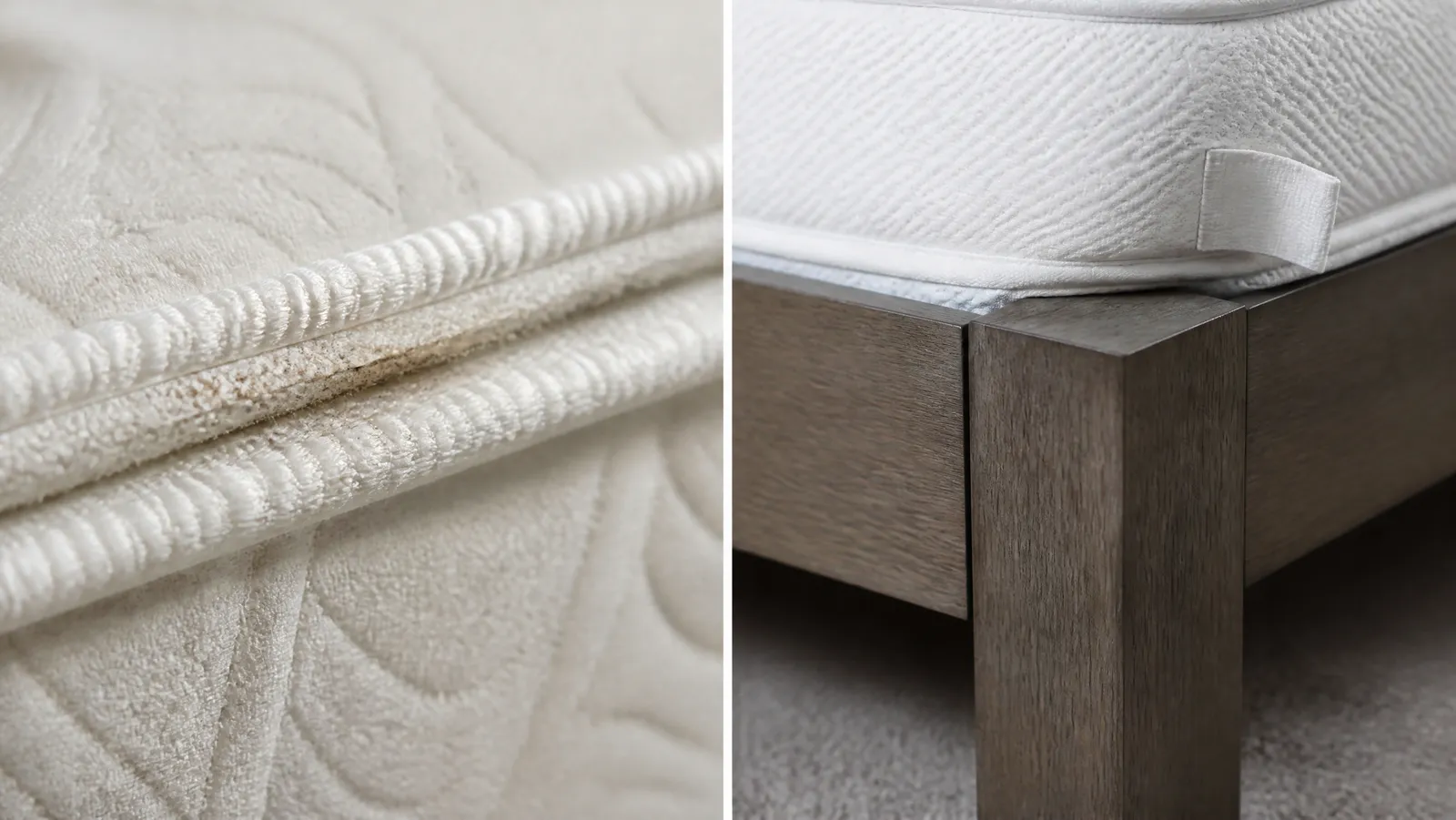
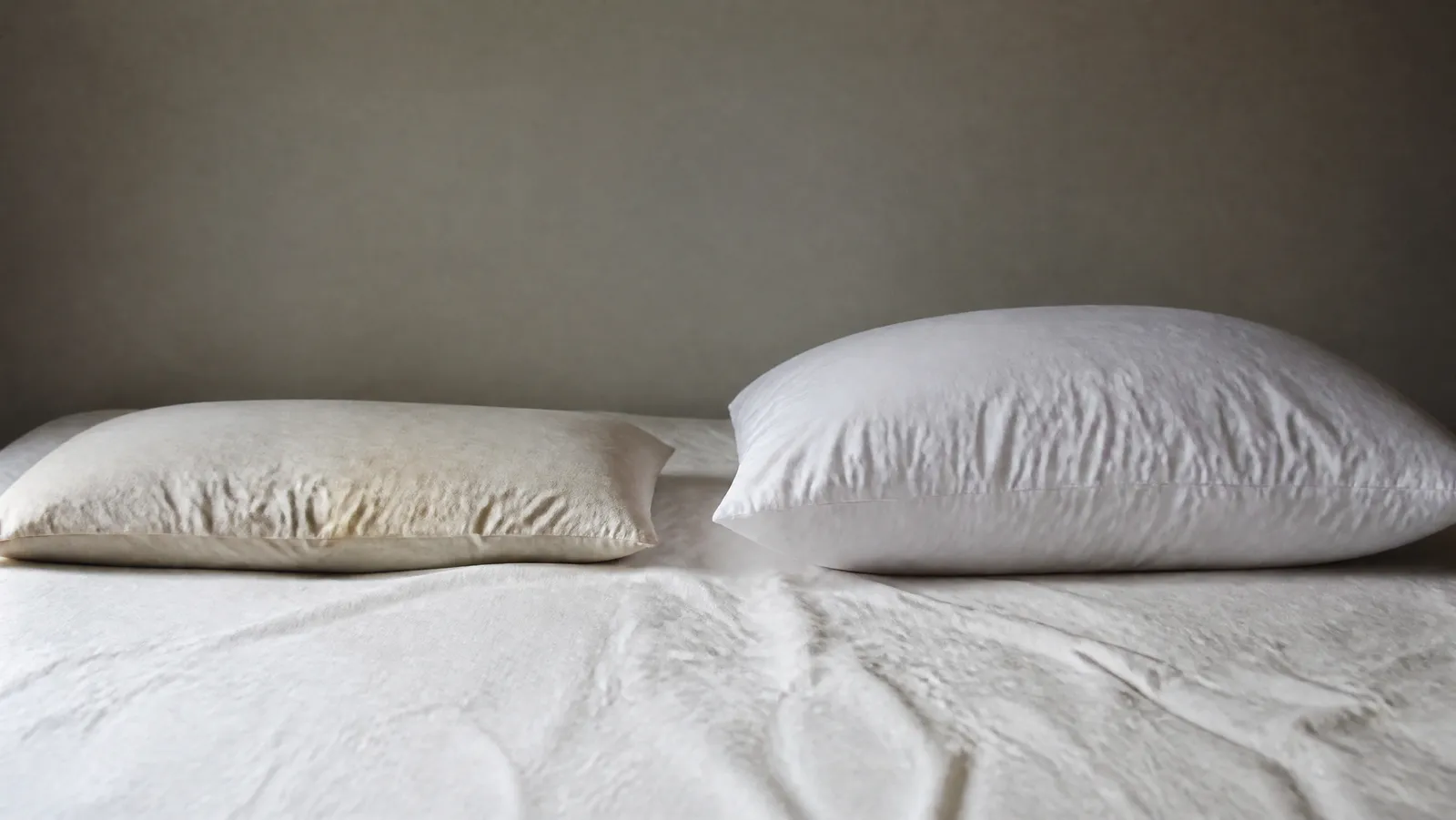
- Your pillow fails a basic physical inspection. Permanent lumps, hollows, or a fold that will not spring back mean the fill has died. This happens on a schedule: the Sleep Foundation recommends replacing most pillows every one to two years, and Harvard Health notes that feather pillows collapse over time and may need replacing every year or so. If you cannot remember buying yours, that is an answer in itself.
- The pain takes vacations when you do. Waking up fine on a different bed — and stiff again the first morning home — is one of the cleanest experiments you can run without spending a dime.
None of these signs is proof on its own. Together, though, they build the kind of case we would act on. If the morning stiffness arrives alongside a dull head as well, our guide to pillows for neck pain and morning headaches covers what that combination does and does not tell you.
The Loft Mismatch: The Cause Most People Miss
Here is the part that surprises readers: a brand-new, expensive pillow can still cause neck pain if its loft — its height under the weight of your head — does not match your sleep position and build.
The mapping is simple. Back sleepers generally need a low-to-medium loft that fills the curve of the neck without pushing the chin toward the chest. Stomach sleepers need almost none. Side sleepers need the tallest loft of anyone, because the pillow has to bridge the entire width of the shoulder; Harvard Health advises side sleepers to keep the spine straight with the pillow sitting higher under the neck than under the head. Individual studies summarized in a 2021 review in the journal Healthcare have recommended supported heights of roughly 7 to 10 cm depending on sleep position, though the review's authors concluded there is still no firm consensus on optimal pillow height — and shoulder width and mattress firmness move the right number for every individual.
Get this wrong in either direction and your neck bends all night — up and over a pillow that is too tall, or down toward the mattress off one that is too flat. Our dedicated guide to pillow height for neck pain walks through measuring your own. And if you sleep mostly on your side, the stakes are highest and the fix is specific — see our guide to choosing a pillow for neck pain if you sleep on your side.
Signs It Is Probably Not Your Pillow
We would be a poor guide if we blamed bedding for everything. These patterns point away from the pillow:
- The pain builds during the day, not overnight. If you wake comfortable and stiffen up across eight hours at a desk, look at your monitor height, chair, and phone habits before your bed.
- The pain follows an injury. Whiplash from a fender-bender, a fall, or a hard tackle needs a clinician's eyes, not a firmer pillow.
- There are red-flag symptoms attached. The Mayo Clinic advises seeking medical care when neck pain is severe, persists, spreads down an arm or leg, or comes with headache, numbness, weakness, or tingling.
Let us say the plain version once: if your neck pain is severe, lasts more than a week or two, follows an injury, or comes with numbness, weakness, or pain radiating into an arm, see a clinician — do not try to solve it with bedding. This article can help you rule a pillow in or out; it cannot examine you.
The Two-Minute Self-Check
Still on the fence? Run these three tests tonight. They cost nothing and settle most cases:
- The fold test. Fold your pillow in half and let go. Down, feather, and fiberfill pillows should spring back promptly. One that stays folded, or oozes back halfway, has lost the resilience that support depends on.
- The flat check. Put the pillow on a hard floor and sight across it. Lumps, craters, or a permanent dent where your head goes mean the fill has broken down unevenly — which many people find worse than a uniformly flat pillow, because it tilts the head night after night.
- The loft check. Lie in your usual sleep position and have someone photograph you from the side. Look at the photo: your ears should sit roughly over your shoulders and your nose should line up with your breastbone. A head that is propped noticeably upward or sagging toward the mattress is a loft mismatch, even if the pillow itself is healthy.
Pass all three and your pillow is probably innocent — look at daytime posture, your mattress, or a clinician next. Fail any one and you have found a likely — and fixable — suspect.
If Your Pillow Flunked: The Replacements We Recommend
Full details on our three current picks render at the end of this page, so we will keep this short. All three were chosen for one reason: adjustability, because the surest lesson of the research above is that height has to fit the sleeper.
- The Royal Therapy Memory Foam Contour Pillow is our overall pick at 59.98 dollars as of July 2026 — a full-width cervical contour whose removable middle layer gives you a lower loft without a second purchase.
- The Missleep Dual-Height Cervical Neck Pillow is the value play at 33.99 dollars as of July 2026 — rotate it 180 degrees to switch between a taller and shorter contour while you find your number.
- The DreamyBlue Signature Adjustable Pillow, 66.50 dollars as of July 2026, is for down-pillow loyalists: shredded foam and down-like tufts you can add or remove by the handful.
We are deliberately not reviewing them in depth here — this is a diagnosis article, and the diagnosis comes first.
The Bottom Line
Can your pillow cause neck pain? Yes — research and every major clinical source we consulted agree that the wrong height or a collapsed fill can hold your neck at a bad angle all night, and that pain worst on waking is the classic signature. If you went looking for a pillow for neck pain when waking up, run the two-minute test before you spend anything: fold, flat check, loft photo. A pillow that passes all three is probably not your problem, and a pillow that fails is among the cheapest causes of neck pain to fix.
If yours flunked, start with the adjustable picks below, or read our complete guide to the best pillow for neck pain for the full field. And if your pain is severe, persistent, or comes with numbness, weakness, or radiating arm pain, skip the bedding aisle and talk to a clinician first. Sleep well — and may tomorrow's alarm meet a neck that turns.
The shortlist
3 pillows compared — firmness, loft, and temperature side by side. The top pick is highlighted.
| Pillow | Firmness | Loft | Sleeps | Best for | Price |
|---|---|---|---|---|---|
Medium | Adjustable | Neutral | Full-width contour with removable layer | $59.98 Check | |
Medium Firm | Adjustable | Cooling | Two-height versatility | $33.99 Check | |
Best for Down LoversDreamyBlue Signature Adjustable Pillow (Queen) | Medium Soft | Adjustable | Neutral | Down feel with foam support | $66.50 Check |
Royal Therapy Memory Foam Contour Pillow (Queen)

Pulling out the middle layer made all the difference for me — at the lower height, that first-hour morning stiffness faded within a couple of weeks.
Contour foam is an adjustment if you have slept on a soft pillow for years, and the shaped profile takes a few nights to feel normal.
The Royal Therapy is the replacement we point most people toward after a failed loft check, because it attacks the mismatch problem directly. It is a full 24 x 14 inch queen-width contour with a 5 inch profile and medium firmness, so you are not balancing your head on a narrow orthopedic block — and its three-layer design lets you pull out the middle memory foam layer to drop the loft for narrower shoulders.
The ventilated memory foam is CertiPUR-US certified, and Royal Therapy describes it as more breathable than traditional contour foam. The washable cover is OEKO-TEX certified bamboo-derived rayon that the maker says is moisture-wicking. In short: one pillow, two workable heights, full width.
Missleep Dual-Height Cervical Neck Pillow
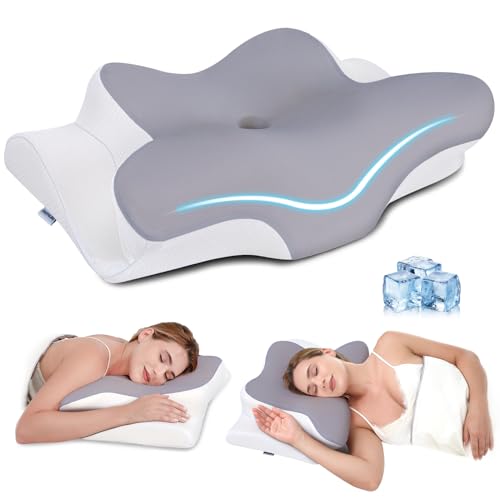
I started on the taller side, flipped it after four nights, and the lower contour turned out to be my number — not having to guess right on the first try is the whole appeal.
The slow-rebound foam sleeps firmer than a fluffy pillow, and the 6-month warranty is short compared with what bigger brands offer.
The Missleep fixes the problem that sinks most first-time cervical pillow purchases: guessing your height wrong. Rotate the pillow 180 degrees and you get a second, lower contour, so a single purchase lets you test two loft settings — useful after a failed loft check, when the difference between a comfortable morning and a stiff one is often a centimeter or two. The ergonomic contour is shaped, per Missleep, to follow the curves of the head and neck and keep the spine aligned.
The core is high-density slow-rebound memory foam certified to OEKO-TEX, CertiPUR-US, and ISPA standards, and the maker describes it as non-toxic and odorless. The ice silk cooling cover unzips for machine washing, and Missleep backs the pillow with a 6-month warranty.
DreamyBlue Signature Adjustable Pillow (Queen)

It fluffs and scrunches like my old down pillow but does not go flat by 3 a.m. — I removed about two handfuls of fill the first week and it has been right ever since.
Dialing in the fill takes a few nights of trial and error, and every adjustment means unzipping the pillow and handling loose fill.
The DreamyBlue is for the reader whose pillow flunked our tests but who cannot stand the idea of molded contour foam. Its patented fill blends shredded memory foam with down-like poly tufts, and DreamyBlue says the result moves like goose down while molding like memory foam — scrunchable, but supportive enough to hold a shape all night.
Loft is genuinely adjustable: an easy-access zipper lets you add or remove fill a handful at a time, and a free extra bag of fill comes in the box, so you can tune the height up as well as down. The CertiPUR-US certified fill arrives freshly manufactured, the case is breathable bamboo-extracted rayon, and the maker positions it for side, back, and stomach sleepers.
The Two-Minute Pillow Test
You can check a pillow in about two minutes with nothing but your hands and a phone camera.
A pillow that fails any one of these is a reasonable suspect for morning neck pain.
Pillow & Neck Pain FAQ
Can a pillow really cause neck pain? Yes. Harvard Health notes that a pillow that is too high or too stiff keeps the neck flexed overnight, which can produce morning pain and stiffness. A pillow that is too flat or worn out can do the same by letting the head drop out of line with the spine.
How long does pillow-related neck pain last? The morning ache itself often eases within 30 to 60 minutes of getting up. According to Spine-health, a stiff neck after sleeping typically resolves within a few days to a week once the cause is corrected.
How often should pillows be replaced? The Sleep Foundation recommends replacing most pillows every one to two years, and Harvard Health notes feather pillows collapse and may need replacing every year or so.
What pillow height is best for neck pain? It depends on your sleep position and shoulder width. Studies summarized in a 2021 review in the journal Healthcare have recommended roughly 7 to 10 cm of supported height depending on position, but the review found no firm consensus on an optimal number — body build matters, so adjustable-loft pillows are a sensible way to find your own fit.
Should I just sleep without a pillow? For most side and back sleepers, no — with no support, the head drops below the spine and the neck bends all night in the other direction. Stomach sleepers are the main group who do well with little or no pillow.
When should I see a doctor about neck pain? If the pain is severe, lasts more than a week or two, follows an injury, or comes with numbness, weakness, fever, or pain radiating down an arm, see a clinician rather than a bedding aisle.
Why you can trust us

Aimee Cannon
Sleep & bedding writer
Aimee Cannon is a sleep and bedding writer who has spent years testing pillows of every kind — memory foam, down, wool, bamboo, buckwheat, and specialty support pillows. She focuses on matching the right pillow to each sleeping position and need, and reports what actually holds up after months of nightly use. When she is not testing pillows, Aimee is usually with her husband and her dog.