Pillow Height and Neck Pain: Finding Your Loft
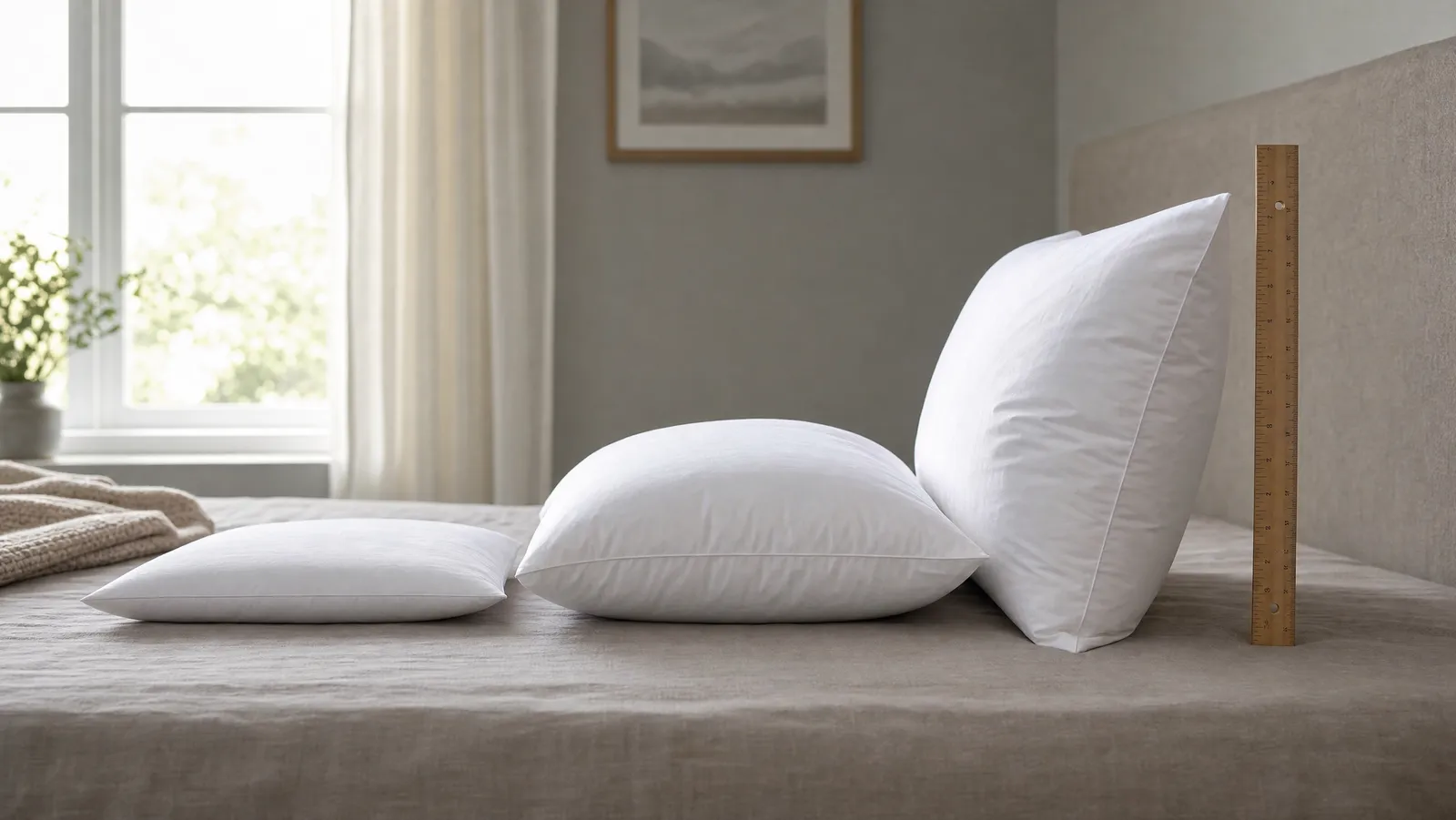
Cup your hand over the space between your ear and the point of your shoulder. When you lie on your side tonight, that gap — typically 4 to 6 inches — is what your pillow must fill exactly. Too little height and your head sags; too much and it cranks upward; either way, your neck works all night instead of resting. Getting pillow height for neck pain right starts with matching that one number, and you can find it before you buy. We may earn a commission from links on this page, at no extra cost to you.
That number is called loft, and it is the most overlooked part of choosing a pillow for neck pain — most shoppers agonize over memory foam versus down and never once measure height. In this guide we explain what loft actually measures, give research-backed height targets for side, back, and stomach sleepers, cover the three variables that shift your personal number, and finish with the adjustable pillows we recommend when you would rather fine-tune than guess.
What pillow loft actually means
Loft is a pillow's height under load: the thickness it settles to with your head resting on it, not the fluffed-up number you see on a store shelf or in a product photo. The distinction matters because fills compress very differently. A soft down pillow that measures 6 inches on the bed can sleep at half that by midnight; a dense foam slab gives up far less. When we talk about pillow loft for neck pain, we always mean the compressed height, because that is the height your spine actually experiences for seven or eight hours.
One more vocabulary trap: pillow size is not pillow height. Standard, queen, and king describe width and length. A king pillow is a wider pillow, not a taller one — so if you are shopping by size to fix your neck, you are turning the wrong dial entirely.
Why does height matter so much? Harvard Health puts it plainly: a pillow that is too high or too stiff keeps your neck flexed overnight, and that sustained bend can show up as pain and stiffness in the morning.
The target is a neutral spine
Every height rule on this page serves one goal, which Harvard Health describes as a neutral pose: head, shoulders, and hips in line, so the whole body can rest and recover overnight. On your side, that looks like a nose that lines up with your breastbone. On your back, it is a chin that neither tucks toward your chest nor points at the ceiling.
There is encouraging evidence that height alone is a real lever. In a 2023 study in the Journal of Physical Therapy Science, researchers individually adjusted pillow heights — in 5-millimeter steps — for 84 adults with neck pain and stiff shoulders, setting each person's head and trunk level when side-lying, with a slight forward neck tilt on the back. Over three months, average neck pain ratings fell from 6.8 to 4.1 on a 10-point scale, and half of the participants reported a clinically meaningful improvement. It is a small study, so we read it as suggestive rather than proof, but it points the same direction as the ergonomics literature: a 2021 review in the journal Healthcare found that proper pillow height depends on cervical alignment, body dimensions such as ear-to-shoulder width, contact pressure, and muscle activity — and concluded there is still no single universal number. Which is exactly why the ranges below are starting points, not prescriptions.
Side sleepers need the tallest loft
On your side, your shoulder props your torso off the mattress and your head has to bridge the full ear-to-shoulder gap. That makes side sleeping the tallest-loft position by a wide margin. The Sleep Foundation advises that side sleepers usually need a pillow at least 4 inches thick, and that broad-shouldered sleepers may need one over 6 inches. The research runs the same way: one study cited in that 2021 Healthcare review found about 10 centimeters — roughly 4 inches — the most comfortable height for side-lying.
Two refinements we like. First, Harvard Health suggests side sleepers keep the pillow slightly higher under the neck than under the head, so it supports the curve rather than just propping up the skull. Second, favor makers who publish real numbers: Bespillow, our long-standing side-sleeper pick, publishes a 5.5-inch side-sleeping height and a 3.7-inch back-and-stomach side on its dual-profile design — which tells you far more than a vague "medium loft" label ever will.
Side sleeping has enough of its own quirks — shoulder pressure, arm position, mattress interplay — that we wrote a dedicated guide to the pillow for neck pain if you sleep on your side.
Back sleepers: lower, with the support under your neck
On your back, your shoulders rest on the mattress, so the pillow only has to fill the shallow hollow behind your neck plus a little height for the head. Studies cited in the 2021 Healthcare review put comfortable back-sleeping heights at roughly 7 to 10 centimeters — about 2.75 to 4 inches. A quick self-check: if your chin points at the ceiling, your pillow is probably too low; if you can feel your chin drifting toward your chest, it is too high.
Shape matters as much as raw height here. Harvard Health recommends back sleepers use rounded support under the natural curve of the neck with a flatter surface cushioning the head — either a purpose-built contour pillow with an indentation for the skull, or the low-tech version: a small neck roll tucked into the pillowcase of a flatter, softer pillow.
Stomach sleepers: very thin, or nothing at all
Stomach sleeping is the hardest position on a sore neck, because your head must turn sideways to breathe, and any pillow height adds a backward arch on top of that rotation. Cleveland Clinic experts caution that lying face down holds you in an awkward position for long stretches and puts pressure on both your neck and lower back.
If you are not ready to change positions, the standard advice is a very thin pillow — a soft, low-loft model, the thinner the better — or no head pillow at all, with a slim cushion under the hips or chest instead to ease the lower back's arch. Many people also find a body pillow helps them migrate gradually toward side sleeping: it keeps the familiar front-of-body pressure while sparing the neck the all-night twist.
Three variables that shift your number
The per-position ranges are averages. Three things move your personal number up or down:
- Shoulder width. The broader the shoulders, the bigger the ear-to-shoulder gap and the taller the loft you need on your side — it is why the Sleep Foundation's guidance for broad-shouldered side sleepers climbs past 6 inches while a narrow-shouldered sleeper may be comfortable near 4.
- Mattress sink. The Sleep Foundation notes that ideal loft depends on both your body shape and how deeply you sink into your mattress — a sleeper who sinks far into a plush bed may find even a 4-inch pillow too high, because the mattress has already swallowed part of the shoulder gap. On a firm mattress, keep your full measurement; on a soft one, subtract.
- Time. Loft is not permanent. The Sleep Foundation notes that pillows flatten and lose support with nightly use and reports that most experts suggest replacing them every one to two years — polyester in as little as six months to two years, down in one to three, memory foam in two to three. A pillow that was the right height when you bought it can quietly become the wrong height without your body or position changing at all. If that sounds familiar, read our full breakdown of can your pillow cause neck pain.
Loft and firmness are one decision, not two
Firmness decides how much of a pillow's measured height survives the night. A firm pillow holds close to its listed loft under your head; a soft one gives much of it up — that plush 6-inch down pillow may effectively sleep like a 3-inch one by 2 a.m., while a firm 4-inch foam pillow still sleeps near 4. So when you compare pillows against your measured number, compare compressed heights, and treat a soft pillow's listed loft with healthy skepticism. We unpack the other half of this trade-off — support versus pressure relief, and which fills hold their height best — in our guide to whether a firm pillow is better for neck pain.
When you cannot measure perfectly: adjustable loft
An honest admission from years of testing: even with a tape measure and the photo test, most people land within an inch of their ideal loft, not on it. Bodies are asymmetric, mattresses soften, and most of us change position at least once a night. That is why our default recommendation for anyone who does not know their number is an adjustable-loft pillow — and the Sleep Foundation makes the same suggestion for sleepers unsure of their ideal thickness.
Adjustable pillows come in two flavors. Loose-fill designs let you unzip the pillow and add or remove filling a handful at a time: the Coop Home Goods Original ($71.20 as of July 2026) is the category benchmark and ships with an extra bag of fill so you can go taller as well as shorter, while the Sidney Sleep pair does the same core job at $58.99 for two as of July 2026. Fixed-step designs like the Osteo cervical pillow build in discrete heights instead — rotate it 180 degrees for a higher or lower profile, and pull the removable insert from the base for another step down.
The trade-offs, plainly: loose-fill pillows need a few trial nights to dial in and an occasional re-fluff to keep the fill even, and Coop itself notes that cooler rooms can make its foam feel firmer. Our full reviews of all three picks are in the cards below.
The bottom line
Start with the position you actually wake up in, not the one you fall asleep in. Side sleepers: measure the ear-to-shoulder gap and expect to land somewhere above 4 inches, taller with broad shoulders. Back sleepers: roughly 3 to 4 inches, with the support concentrated under the neck's curve. Stomach sleepers: as thin as you can tolerate, or nothing. Then adjust for your mattress, and re-check yearly, because loft quietly leaks out of every pillow.
One thing a pillow cannot do is treat an underlying condition. If your neck pain is severe or persistent, follows an injury, or comes with numbness, weakness, or pain radiating down an arm, see a clinician before you spend anything on bedding. For everything beyond height — materials, shapes, firmness, and our full set of tested picks — start with Home Pillow Review's neck pain pillow guide.
The shortlist
3 pillows compared — firmness, loft, and temperature side by side. The top pick is highlighted.
| Pillow | Firmness | Loft | Sleeps | Best for | Price |
|---|---|---|---|---|---|
Medium Firm | Adjustable | Neutral | Dialing in your exact loft | $71.20 Check | |
Medium | Adjustable | Neutral | Adjustable loft on a budget | $58.99 Check | |
Best Dual-HeightOsteo Cervical Pillow with Adjustable Height | Medium Firm | Adjustable | Cooling | Contour shape with height options | $69.99 Check |
Coop Home Goods Original Adjustable Pillow (Queen)

After two nights of removing a handful of fill at a time, I landed on a height that ended my morning ear-to-shoulder ache — and keeping the leftover bag means I can top it back up as the fill settles.
Dialing in the fill took several nights of trial and error, and the pillow wants a quick shake and re-fluff most mornings to keep the fill spread evenly.
The Coop Original is the pillow we recommend when you know your loft is wrong but are not sure what the right number is. Unzip it and you can add or remove the cross-cut memory foam and microfiber fill — Coop calls the blend Oomph — a handful at a time until the pillow sleeps at exactly the height your position needs. Every pillow ships with an extra bag of fill, so you can build it taller as well as shorter, or top it back up as the fill settles over the years.
The Lulltra cover is described by the maker as ultra-soft and breathable, and the foam is CertiPUR-US and GREENGUARD Gold certified, freshly manufactured rather than repurposed. Two honest notes: Coop itself says cooler rooms can make the foam feel firmer, and dialing in your fill level takes a few trial nights.
Sidney Sleep Adjustable Bed Pillows (Queen, Set of 2)

I bagged up about a third of the filler on the first night and it has held that height since; the washable cover dries fast enough to be back on the bed by evening.
Straight out of the box it was far too tall for me, so expect to remove a good amount of foam before it is sleepable — and that trial-and-error takes a few nights.
At $58.99 for two as of July 2026 — under $30 a pillow — this is the least expensive way to test whether adjustable loft fixes your mornings. Like our top pick, it lets you add or remove shredded fill to dial in loft and firmness, and it ships with additional foam filling plus a storage bag for the excess, so you can raise the loft as well as lower it. That is the feature separating a true adjustable pillow from one you can only flatten.
Sidney Sleep positions the curved shape for side and back sleepers, and the plush outer cover removes for machine washing and dries fast, which matters for a pillow you will be unzipping regularly. The listing makes no mention of foam certifications. Because it ships as a pair, it is also the cheapest way to put a matched loft on both sides of the bed.
Osteo Cervical Pillow with Adjustable Height
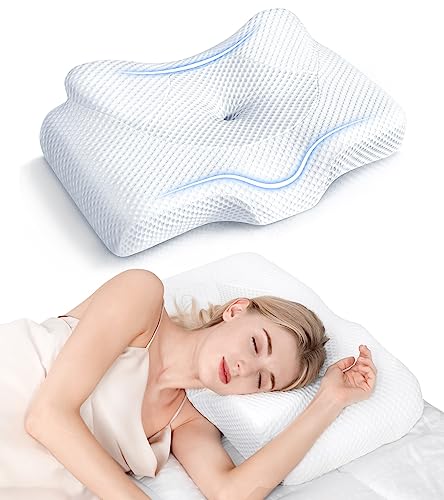
Flipping between the lower side for back sleeping and the taller side when I settle onto my shoulder sounded like a gimmick, but the two profiles genuinely feel different and the mesh cover sleeps cool.
The maker does not publish the two heights in inches, so finding your side is pure experimentation, and ours needed the full 48 hours of airing before it finished expanding.
The Osteo takes the opposite approach to loose fill: fixed height steps instead of handfuls of foam. Its US-patented hollow-center design, which the maker says cradles the head while supporting the neck's natural curve, is built with two thicknesses — rotate the pillow 180 degrees and you are sleeping on a higher or lower profile. A removable insert in the base adds another step down. Osteo does not publish the heights in inches, so treat it as high, low, and lower rather than exact numbers.
The memory foam is CertiPUR-US certified and Oeko-Tex approved, and the maker describes it as odorless; the 3D mesh fiber case is billed as cooling and breathable. Plan ahead: the maker advises airing the pillow for 48 hours before first use so it fully expands.
How to Measure Your Ideal Pillow Height
You can get a solid starting loft with a tape measure, a wall, and two minutes. Wear a thin shirt and stand with your back and shoulder blades flat against the wall, shoulders relaxed.
Treat the result as a starting point, not gospel — bodies and mattresses are messy. An adjustable pillow like the Coop Original lets you fine-tune from that starting number a handful of fill at a time.
Pillow Height FAQ
Does pillow size — standard, queen, king — affect neck pain? Not the way people assume. Size labels describe width and length, not height: a king pillow is a wider pillow, not a taller one. The number that matters for your neck is loft, the pillow's compressed height, and a size label tells you nothing about it.
Is a very thin pillow better for neck pain? Only for some sleepers. Stomach sleepers generally do best with a very thin, soft pillow — or none at all — because any added height increases how far the neck arches back. For side sleepers, that same thin pillow lets the head sag toward the mattress all night, which is the opposite problem.
Can a pillow be too high? Yes, and it is one of the most common mistakes we see. Harvard Health notes that a pillow that is too high or too stiff keeps the neck flexed overnight and can leave you with pain and stiffness in the morning.
How can I tell my current pillow is the wrong height? Watch for the workarounds: sliding a hand or forearm under the pillow means it is too low, folding it double means it is far too low, and waking with your chin tucked toward your chest suggests it is too high. Morning neck stiffness that eases as the day goes on is another classic clue.
My pillow used to be the right height. What happened? Fill compresses with use. The Sleep Foundation notes that pillows flatten and lose support with nightly use and reports that most experts suggest replacing them every one to two years — polyester in as little as six months to two years, down in one to three, memory foam in two to three.
Why you can trust us

Aimee Cannon
Sleep & bedding writer
Aimee Cannon is a sleep and bedding writer who has spent years testing pillows of every kind — memory foam, down, wool, bamboo, buckwheat, and specialty support pillows. She focuses on matching the right pillow to each sleeping position and need, and reports what actually holds up after months of nightly use. When she is not testing pillows, Aimee is usually with her husband and her dog.