The Right Pillow for Neck Pain if You Sleep on Your Side
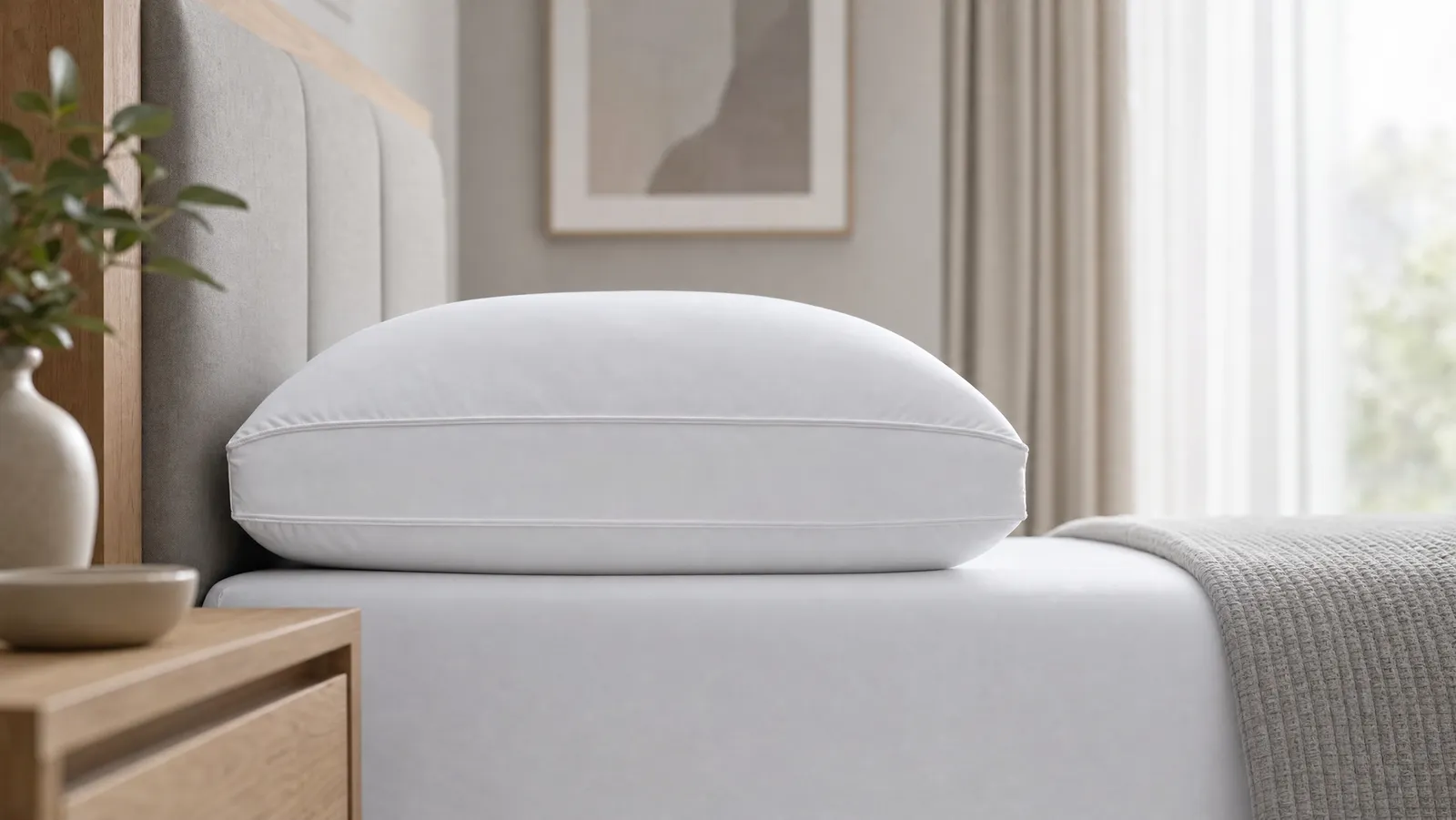
You wake up with your head tipped toward the mattress and one side of your neck locked solid. Before you blame your desk, your mattress or your age, measure your pillow.
For side sleepers, morning neck pain often traces back to one spec: loft, meaning pillow height. Side sleeping opens the widest gap of any sleeping position — from your ear down to the mattress, across the width of your shoulder — and your pillow has to fill that gap and still be filling it at 6 a.m.
We may earn a commission from links on this page, at no extra cost to you.
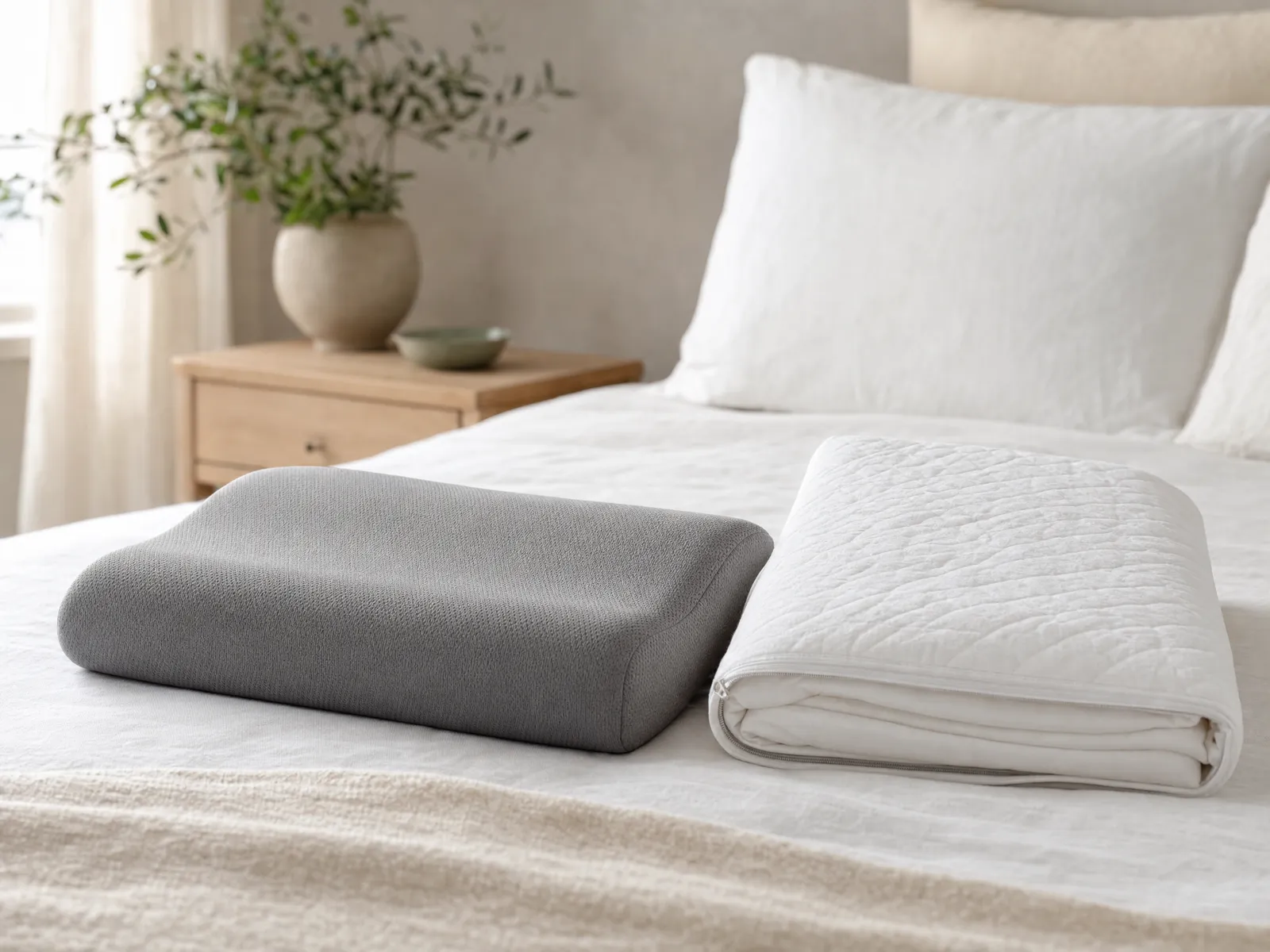
We have slept on, squashed and measured a lot of pillows in this category, and the short version is this: our favorite for most side sleepers is the Bespillow Contour Cervical Pillow, because the maker actually publishes both of its heights — a 5.5-inch edge for side sleeping and a 3.7-inch edge for back and stomach sleeping — so you can check it against your own body before you buy. But the right answer depends on your shoulder width, your mattress and where your pain actually sits, so below we work through the whole decision before we name picks. For the wider view across every sleeping position and every kind of neck pain, start with our guide to how to choose a pillow for neck pain.
Why side sleepers get the worst of it
Side sleeping is the most popular position there is. According to the Sleep Foundation, a majority of adults sleep on their side, and it is one of the two positions most often suggested for people with neck pain — the other being back sleeping. Stomach sleeping with the head turned to one side, the Sleep Foundation notes, is not recommended for relieving neck pain.
Neck pain itself is not a niche complaint. A systematic analysis of the Global Burden of Disease Study 2021 estimated that neck pain affected roughly 203 million people worldwide in 2020, and projected about 269 million cases by 2050. The Sleep Foundation reports that nearly 10% of people have neck pain, and that approximately 70% of people with chronic neck pain experience poor sleep quality.
Here is the geometry problem. On your back, the space your pillow has to fill is small — essentially the depth of the natural curve behind your neck. On your side, the pillow has to span everything between the mattress and your ear, and that distance is set by the width of your shoulder. It is the tallest gap any sleeper has to fill, and it is the one most standard pillows are too short for.
The Cleveland Clinic frames the target simply: a pillow should keep your neck parallel to the mattress, rather than bent down or up. Miss low, and your head sags toward the bed, stretching the muscles on the upper side of your neck for seven hours. Miss high, and your head is levered up toward the ceiling, compressing the other side. Either way you are holding a mild side-bend all night, which may help explain why this kind of pain is so often one-sided and loudest in the first few minutes after you get up.
Loft is the whole ballgame
The best pillow for neck pain for side sleepers starts with a number, not a brand name. Measure the vertical distance from your mattress to the middle of your ear while you are lying on your side, on your own bed, with no pillow. That number, give or take half an inch, is the loft you are shopping for. For most adults it lands somewhere in the 4 to 6 inch range.
Height is not a small variable. A 2016 study published in PeerJ measured what happens to the head and neck across four pillow heights, from 11 cm up to 17 cm. The researchers found that average cranial pressure at the tallest height was roughly 30% higher than at the lowest, that cervical pressure at the lowest height was about 65% lower than at the tallest, and that going from the lowest to the highest pillow increased the measured cervical angle by 66.4%. In plain terms: a couple of inches of pillow height meaningfully changes both where the pressure sits and what shape your neck holds. That is a good argument for measuring rather than eyeballing.
Two things move your number. The first is shoulder width — broader shoulders need more pillow, which is why the same pillow can be perfect for one person and useless for their partner. The second is your mattress. As the Cleveland Clinic points out, on a firmer mattress you need a thicker pillow, because your shoulder does not sink into the surface very far. Swap a plush bed for a firm one and your ideal loft can change by an inch without your body changing at all.
This is also where dual-height pillows earn their place. If you are a pillow for neck pain side and back sleeper — that is, you start on your side and roll onto your back at some point — a contour that rotates 180 degrees gives you a tall edge and a low edge in one pillow. Bespillow publishes 5.5 inches for the side-sleeping edge and 3.7 inches for the back-and-stomach edge, which is close to the honest difference between what those two positions need.
Firmness is the spec that keeps loft honest
A pillow's height on the shelf is marketing. Its height under a head at 3 a.m. is the number that matters, and the thing that separates the two is firmness.
This is the single most common way pillows for side sleepers with neck pain fail. A tall, soft pillow feels wonderful for the first thirty seconds, then compresses to half its height and leaves your neck exactly where it was. The relevant trial evidence here is a 2010 study by Gordon and colleagues in the Journal of Pain Research, which compared five pillow types against people's own pillows: feather pillows produced the highest frequency of waking symptoms and were associated with increased risk of cervical stiffness, headache and scapular or arm pain. Feathers shift when you shift; support that moves is not support.
For side sleeping, the practical rules are:
- Aim medium-firm to firm. You want the pillow to resist your head, not swallow it.
- Look for density, not fluff. High-density and slow-rebound foams hold a tall loft under load far better than low-density fills.
- Test compression, not first impressions. Press the pillow down with the weight of your forearm. If it flattens easily, it will flatten under 10-plus pounds of head.
- Discount anything you have to fold. If a pillow only works doubled over, it is the wrong pillow.
Your bottom shoulder is the second problem
Loft solves your neck. It does not solve your shoulder — and for a lot of side sleepers the shoulder is where the night actually goes wrong. All of your upper-body weight lands on one relatively small joint for hours, and the usual coping strategy, tucking the bottom arm underneath the pillow, quietly changes your loft and can leave the arm numb. If shoulder ache is as loud as the neck ache for you, our guide to pillows for neck and shoulder pain goes deeper into that half of the problem.
Two fixes are worth knowing. The first is free: leave your bottom arm out in front of you rather than under the pillow, and put a pillow between your knees so your top hip does not rotate your spine and drag your shoulder forward with it.
The second is a pillow with somewhere for the arm to go. The Wattne Side Sleeper Pillow with Arm Hole — 59.99 dollars as of July 2026 — has an enlarged arm channel and a widened sleep opening so the bottom shoulder and arm can pass through instead of being compressed. Wattne positions the design for neck, shoulder and rotator cuff pressure relief; that is the maker's claim rather than a clinical result, but the underlying idea, that the arm needs a route out from under your body, is sound and it is the reason we keep one of these on the list.
Which fill works for side sleepers with neck pain
Fill type is where most buying guides start and where you should probably finish, because it matters less than height. Still, the differences are real.
Memory foam is the default for this job, and reasonably so — it holds a shape under load rather than redistributing away from the heaviest point, which is exactly what a side sleeper needs. Solid-core contour foam gives you a fixed, dependable loft. Shredded foam gives you an adjustable one. The trade-offs are heat, a slower response when you turn over, and a break-in period. Our memory foam pillows guide covers the fill in far more detail.
Latex deserves a mention that it rarely gets. In that same 2010 Journal of Pain Research study, latex pillows came out best and were recommended over other types for control of waking headache and scapular or arm pain. The Cleveland Clinic also notes that natural latex offers support without heating you up the way memory foam can. It is springier and pricier, and it is not an option if you have a latex allergy.
Feather and down are the fills to be most cautious about here. Beyond the trial result above, the Cleveland Clinic's plain description is hard to improve on: they feel comfortable when you settle in, but the feathers move when you do, so you end up with no support.
Adjustable fill is the honest answer for anyone who has already returned two pillows. Rather than betting on a manufacturer's idea of an average neck, you add or remove filler until the height matches you. The TWK Original Adjustable Bed Pillow — 39.99 dollars as of July 2026 — ships with an extra bag of foam filler for exactly that purpose, in a queen size with a detachable, washable cover.
Our four picks, and who each one is for
Full details and current prices are in the cards on this page. In short:
Bespillow Contour Cervical Pillow, 39.99 dollars as of July 2026 — our pick. The published 5.5-inch and 3.7-inch heights are the reason it wins. You can compare a real number against your own measurement instead of trusting a photo, and the CertiPUR-US and Oeko-Tex certified foam is firm enough to keep that height honest.
CosBed Dual-Height Cervical Neck Pillow, 33.98 dollars as of July 2026 — best value. The CosBed uses the same rotate-for-two-heights approach with a thickened neck contour and a hollow center, in high-density slow-rebound foam that CosBed lists as OEKO-TEX, CertiPUR-US and ISPA certified. It is the cheapest sensible way to find out whether a firm contour suits you, with a 6-month manufacturer warranty behind it. It does not publish its heights, which is the compromise you accept at this price.
Wattne Side Sleeper Pillow with Arm Hole, 59.99 dollars as of July 2026 — best for shoulder pressure. Buy this one if your shoulder, not your neck, is what wakes you. The arm channel is a genuinely different idea rather than a re-shaped rectangle.
TWK Original Adjustable Bed Pillow, 39.99 dollars as of July 2026 — best adjustable. For broad shoulders, unusual proportions, or anyone who has already been let down by a fixed loft. You do the tuning; the extra bag of filler is what makes that possible.
Where these pillows fall short
We would rather you hear this from us than discover it on night three.
- Contour pillows are shaped for an average head. If yours is not average — very broad shoulders, a short neck, a strong preference for burying your face — a moulded contour can fight you rather than fit you.
- The evidence for contours is mixed. In the 2010 Journal of Pain Research comparison, the foam contour pillow performed no better than a plain foam pillow for waking symptoms. Many people find contours helpful, and we do too, but nobody can promise you a result.
- Cooling covers are covers. An ice silk or breathable cooling case is genuinely nicer against the skin than plain cotton, but the foam underneath still stores heat. If you sleep very hot, treat cooling claims as a small improvement rather than a solution.
- Adjustable pillows are work. Getting the fill right takes several evenings, the loose foam fill shifts overnight, and you will need to top it up months later.
- No pillow fixes the rest of the setup. A sagging mattress, a phone held at chest height for two hours a night, or a shoulder problem that needs actual assessment will keep producing morning pain no matter what your head rests on.
Dialing in the rest of the setup
A new pillow works better inside a slightly changed routine.
- Put a pillow between your knees. It stops your top hip rolling forward and twisting the spine below the neck you have just carefully aligned.
- Get the bottom arm out from under the pillow. Tucking it under adds an inch of loft you did not plan for and compresses the arm.
- Check yourself in a photo. Have someone take one from behind while you lie on your side. Nose, chin, breastbone and navel should sit roughly in a line.
- Give it one to two weeks. Support that is new is not automatically support that is wrong. Buy where you can return it, and mark the return deadline in your calendar on the day it arrives.
- Replace it when it stops holding height. The day you start folding a pillow in half is the day it stopped being the pillow you bought.
When to stop shopping and talk to a clinician
A pillow is a comfort and alignment tool, not medical treatment. If your neck pain is severe, persistent, follows a fall or an accident, or comes with numbness, tingling, weakness, or pain radiating down one or both arms, see a doctor or physical therapist rather than another product page. The Mayo Clinic advises seeking care if neck pain persists despite self-care, and specifically if it radiates into the arms or legs or arrives alongside headache, weakness, numbness or tingling. Those symptoms need assessment, not a new pillow.
The bottom line
If you sleep on your side and wake up sore, start with height. Measure the gap from your mattress to your ear, buy a pillow firm enough to still be that tall in the morning, and give it two weeks. That single change does more than any material, cover or brand claim on the market.
For most people we would start with the Bespillow, because it is the rare pillow in this category that tells you its actual heights: 5.5 inches for side sleeping, 3.7 inches for back. If your shoulder hurts more than your neck, the Wattne's arm channel is the more useful design. If you have already been burned by a fixed loft, buy the adjustable TWK and spend a week tuning it. And if you want to see how side sleeping fits alongside back sleeping, stomach sleeping and the rest of the picture, read Home Pillow Review's neck pain pillow guide next.
The shortlist
4 pillows compared — firmness, loft, and temperature side by side. The top pick is highlighted.
| Pillow | Firmness | Loft | Sleeps | Best for | Price |
|---|---|---|---|---|---|
Medium Firm | Adjustable | Cooling | Side sleepers | $39.99 Check | |
Best ValueCosBed Dual-Height Cervical Neck Pillow | Medium Firm | Adjustable | Cooling | Two-height versatility | $33.98 Check |
Best for Shoulder PressureWattne Side Sleeper Pillow with Arm Hole | Medium | High | Cooling | Shoulder and arm pressure | $59.99 Check |
Best AdjustableTWK Original Adjustable Bed Pillow (Queen) | Medium | Adjustable | Neutral | Dialing in your own loft | $39.99 Check |
Bespillow Contour Cervical Pillow

I measured myself at just over five inches from ear to shoulder and the tall side is almost exactly right, so my head finally stays level instead of drifting down toward the mattress by 3 a.m.
The contour is a fixed shape, so the first several nights felt strange, and if you move between three or four positions a night you will fight it.
The Bespillow is the one we hand to most side sleepers, and the reason is a number rather than a feeling: the maker publishes both of its heights. Rotate it 180 degrees and you get a 5.5-inch edge built for side sleeping or a 3.7-inch edge for back and stomach nights. That is a real spec you can hold against your own ear-to-shoulder measurement before you ever unwrap it, which is more than most pillows in this category will give you.
The shape is a US-patented contour that Bespillow says cradles the head and supports the curve of the neck, built from memory foam that is both CertiPUR-US and Oeko-Tex certified, with a rebound the maker states at 3 to 5 seconds. It ships under an ice silk cooling pillowcase made from a breathable fiber fabric, and the cover is removable and machine washable — Bespillow suggests cleaning it monthly.
CosBed Dual-Height Cervical Neck Pillow

For the money it is a lot of pillow — the neck roll is genuinely firm, and the hollow in the middle stopped my head from being shoved forward all night.
Neither height is printed anywhere, so if you have unusually broad shoulders you are guessing until it arrives.
The CosBed is the cheapest sensible way to test whether a taller, firmer contour is what your neck has been asking for. It uses the same two-height trick as our top pick — rotate it 180 degrees for a higher or lower contour — paired with a thickened neck roll and a hollow center that lets the back of the head settle instead of being pushed forward.
The core is a high-density slow-rebound memory foam, and CosBed lists OEKO-TEX, CertiPUR-US and ISPA certification, describing the foam as non-toxic and odorless. The breathable cooling cover is removable and machine washable, and there is a 6-month manufacturer warranty behind it. What you do not get is a published height for either side, so you are buying on the shape rather than on a measurement.
Wattne Side Sleeper Pillow with Arm Hole

Being able to thread my bottom arm through the channel instead of tucking it under the pillow was the change that finally stopped my shoulder aching by morning.
It is large and shaped for one job, so it does not work as a normal pillow if you roll onto your back, and it costs more than the plain contours.
Most side sleeper pillows solve for the head and forget the arm. The Wattne does not: it has an enlarged arm channel and a widened sleep opening, so the bottom shoulder and arm have somewhere to go instead of being crushed under your own body weight or jammed beneath the pillow. Wattne positions it for neck, shoulder and rotator cuff pressure relief — that is the maker's framing, not a clinical finding.
Inside is CertiPUR-US certified 70D slow-rebound memory foam, which is dense enough to hold a tall loft rather than pancake under a heavy head. It ships with two machine-washable pillowcases, an all-season cover and a cooling cover, and it doubles as a leg, lap or sofa cushion. There is even a rear pocket for an aromatherapy sachet if that is your thing.
TWK Original Adjustable Bed Pillow (Queen)

Adding fill until the pillow matched my shoulder took about four nights of fiddling, but it is the only pillow I have owned that ended up the right height instead of nearly right.
Adjusting it is messy and slow, and loose fill shifts overnight, so you will occasionally wake up needing to pat it back into shape.
If you have already bought two contour pillows that were nearly right, stop guessing and buy loft you can change. The TWK Original uses an adjustable fill structure aimed at side, back and stomach sleepers, and it ships with an extra bag of foam filler so you can add height or take it out until the pillow matches your own shoulder width rather than an average one.
The interior is memory foam that TWK describes as breathable and pressure-reducing, under a detachable, machine-washable, quick-drying cover. This is the queen size, sold as a single pack. The trade-off is that you are doing the work — expect a week of adding and removing handfuls of fill in the evening, and expect to top it up again months later once the foam has settled and compressed.
How to Measure Your Side-Sleeping Loft
You can measure the loft you need in about two minutes, and it beats guessing from a product photo. You need a tape measure and someone to read it, or a phone camera on a timer.
Most adults land somewhere in the 4 to 6 inch range. Broad-shouldered sleepers on firm mattresses land higher; smaller sleepers on plush mattresses land lower.
Side Sleeper Pillow FAQ
What loft does a side sleeper with neck pain need? Enough to fill the vertical gap between the mattress and your ear, which for most adults falls somewhere around 4 to 6 inches. Measure it rather than guessing, because shoulder width and mattress firmness both move the number.
Should a side sleeper's pillow be soft or firm? Firmer than most people expect. A soft pillow can start tall and still collapse to nothing under the weight of a head, which puts you back where you started. Medium-firm to firm is the usual sweet spot for side sleeping.
Do contour cervical pillows actually help? Many people find them helpful, but the evidence is mixed. In a 2010 trial published in the Journal of Pain Research, a foam contour pillow performed no better than a plain foam pillow for waking neck symptoms, while latex pillows fared best. Treat a contour as a good bet, not a guarantee.
How long does it take to adjust to a new pillow? Give it one to two weeks before you judge it. New support changes how your neck muscles rest, and a pillow that feels odd on night one is often fine by night ten. Buy from somewhere with a return window in case it is not.
Can one pillow work if I sleep on my side and my back? Yes, and that is exactly what a dual-height contour is for. Pillows that rotate 180 degrees give you a taller edge for side sleeping and a lower edge for back sleeping, so a single pillow covers both without you stacking anything.
When should I replace my pillow? When it stops holding its height. If you have to fold it, punch it, or double it up to get comfortable, it is no longer the loft you bought, and no amount of technique fixes a collapsed pillow.
Why you can trust us

Aimee Cannon
Sleep & bedding writer
Aimee Cannon is a sleep and bedding writer who has spent years testing pillows of every kind — memory foam, down, wool, bamboo, buckwheat, and specialty support pillows. She focuses on matching the right pillow to each sleeping position and need, and reports what actually holds up after months of nightly use. When she is not testing pillows, Aimee is usually with her husband and her dog.