Pillows for Neck Pain and Morning Headaches

You wake up and, before you are properly awake, you already know two things: your neck is stiff and your head aches. If that is your morning, the neck is worth investigating — and the cheapest variable to change is the height your head sits at all night. Treat a pillow for neck pain and headaches as a test, not a treatment: change one thing, give it two weeks, judge honestly. We may earn a commission from links on this page, at no extra cost to you.
Here is the caveat that belongs at the top rather than buried in a conclusion: this may not be a pillow problem at all. Plenty of morning headaches have nothing to do with how your neck was arranged overnight, and some of them need a clinician rather than a purchase. What follows is how to tell the difference, what to change first, and how to run the test properly. For the wider picture on shapes, fills and loft, start with our main guide to pillows for neck pain.
Does your headache actually start in your neck?
There is a recognised category for head pain that comes from the neck. The Cleveland Clinic describes cervicogenic headache as head pain caused by a cervical spine problem, where the pain you feel in your head originates in the bony structures or soft tissues of your neck. The features it lists are one-sided head pain that may travel from the base of the skull upward or from the back of the head forward, limited range of motion in the neck, and headaches that get worse when you move your neck.
The bar for that diagnosis is high. The International Headache Society's ICHD-3 classification requires clinical or imaging evidence of a disorder in the cervical spine or neck tissues, plus at least two separate pieces of evidence of causation — for example, the headache appearing in step with the neck problem, or improving as the neck problem improves. A StatPearls review hosted by the NIH's National Library of Medicine puts the prevalence of cervicogenic headache among people with headaches at 0.4 to 4 percent, depending on how many criteria are met. It is not the common case.
Two things follow. First, you cannot diagnose yourself from a blog post, and we will not pretend you can. Second, the pattern is still worth noticing, because it tells you whether a two-week pillow experiment is worth your time at all:
- The pain is there when you wake, rather than building through the day.
- It is often one-sided, rather than a band around the whole head.
- It tends to start low — the base of the skull or upper neck — and travel forward toward a temple, the forehead, or behind one eye.
- Your neck is stiff and turns badly, and certain head positions make the ache worse.
If that list reads like your mornings, the next thing to work through is our self-check on whether your pillow is causing your neck pain. It is the diagnostic half of this article.
What about a pillow for neck pain and migraines?
This is the query people type most hopefully, so we will be blunt: a pillow is not a treatment for migraine. MedlinePlus, the NIH's consumer health service, describes migraine as a recurring headache with moderate to severe throbbing or pulsing pain, often on one side of the head, frequently with nausea and sensitivity to light and sound, and sometimes preceded by an aura of flashing lights or zig-zag lines. It is one of the conditions covered by the National Institute of Neurological Disorders and Stroke — a neurological disorder, managed by clinicians.
So if your mornings involve throbbing, nausea, needing the curtains shut, or visual disturbance, the pillow is not the lever. Buying one instead of booking an appointment costs you time you do not need to lose. Sleep quality and neck position can sit alongside a headache disorder without being the cause of it. If migraine is on the table, see a clinician, and treat any pillow change as housekeeping rather than therapy.
Why pillow height is the variable to test first
The mechanism people describe is simple, and worth stating carefully rather than dramatically. A pillow that is too tall can hold your neck bent forward all night. A pillow that is too flat can let a side sleeper's head drop toward the mattress. Either way, the small suboccipital muscles at the base of the skull and the upper trapezius may spend the night slightly stretched or slightly shortened, and many people describe waking with tightness in exactly that band. That is a plausible mechanism rather than a demonstrated one.
The research here is suggestive rather than conclusive, and we are not going to oversell it. The Akershus population-based study of chronic headache measured muscle tenderness in people with chronic tension-type headache and found that neck muscle tenderness scores were higher than head muscle scores — but its authors were explicit that whether the increased muscle tenderness is primary or secondary to the headache should be addressed by future studies. In plain terms: tight neck muscles and headaches travel together, and nobody has established which one is pulling the cart.
That justifies a cheap experiment, not a promise. Two other things point the same way. When the Cleveland Clinic lists ways to reduce your risk of cervicogenic headache, sleeping on a supportive pillow and mattress appears on that list alongside adjusting your posture. And the Sleep Foundation, summarising the research on morning headaches, puts them at roughly one person in every thirteen, naming sleep posture among the contributors alongside sleep apnea, teeth grinding and dehydration.
Height goes first because it is the largest change you can make without touching your bed, your medication or your schedule. If you want the measurements and the how-to, we have covered pillow height for neck pain in detail.
Neck, shoulder and jaw: the parts that travel together
Tightness rarely stays where it starts. The upper trapezius runs from the base of the skull out across the top of the shoulder, which is why people who wake with a sore neck so often mention a sore shoulder in the same sentence. If that is you, pillows for neck and shoulder pain covers the loft and shape questions that matter most for side sleepers.
The jaw is the other neighbour, and it needs its own paragraph. If you are searching for a pillow for neck and jaw pain, night-time clenching may be part of the picture. The Cleveland Clinic lists the symptoms of bruxism as headaches or facial pain especially in the morning, sore jaw muscles, earaches, tinnitus, pain when eating, and difficulty opening and closing your mouth — a cluster that can overlap with the tight neck people notice in the morning. But be clear about the limits: no pillow stops you clenching. The Cleveland Clinic's guidance is to tell a healthcare provider if bruxism symptoms persist, and bruxism is typically diagnosed by a dentist. This is a dentist's question if it is happening, not a bedding question.
What to change, and in what order
Change one thing at a time, cheapest and most reversible first.
- Height. Aim to get head and neck close to neutral: ears roughly in line with your shoulders, nose pointing straight ahead rather than tipped up or tucked down. Biggest effect, lowest cost, easiest to reverse.
- Position. Back and side sleeping need different heights — a side sleeper has to fill the gap between ear and shoulder, a back sleeper needs far less than that. Stomach sleeping is the hardest position to make neutral at any height.
- Surface. Only once height and position are settled is it worth arguing about memory foam versus latex versus down, or firm versus soft. Firmness changes how well a height holds through the night; it does not rescue a height that is wrong.
Choosing the best pillow for neck pain and headaches
All three of our picks are height-tunable, and that is the point rather than a coincidence. You are running an experiment, and a fixed-height pillow gives you exactly one data point. If it turns out to be the wrong point, you are shopping again instead of adjusting.
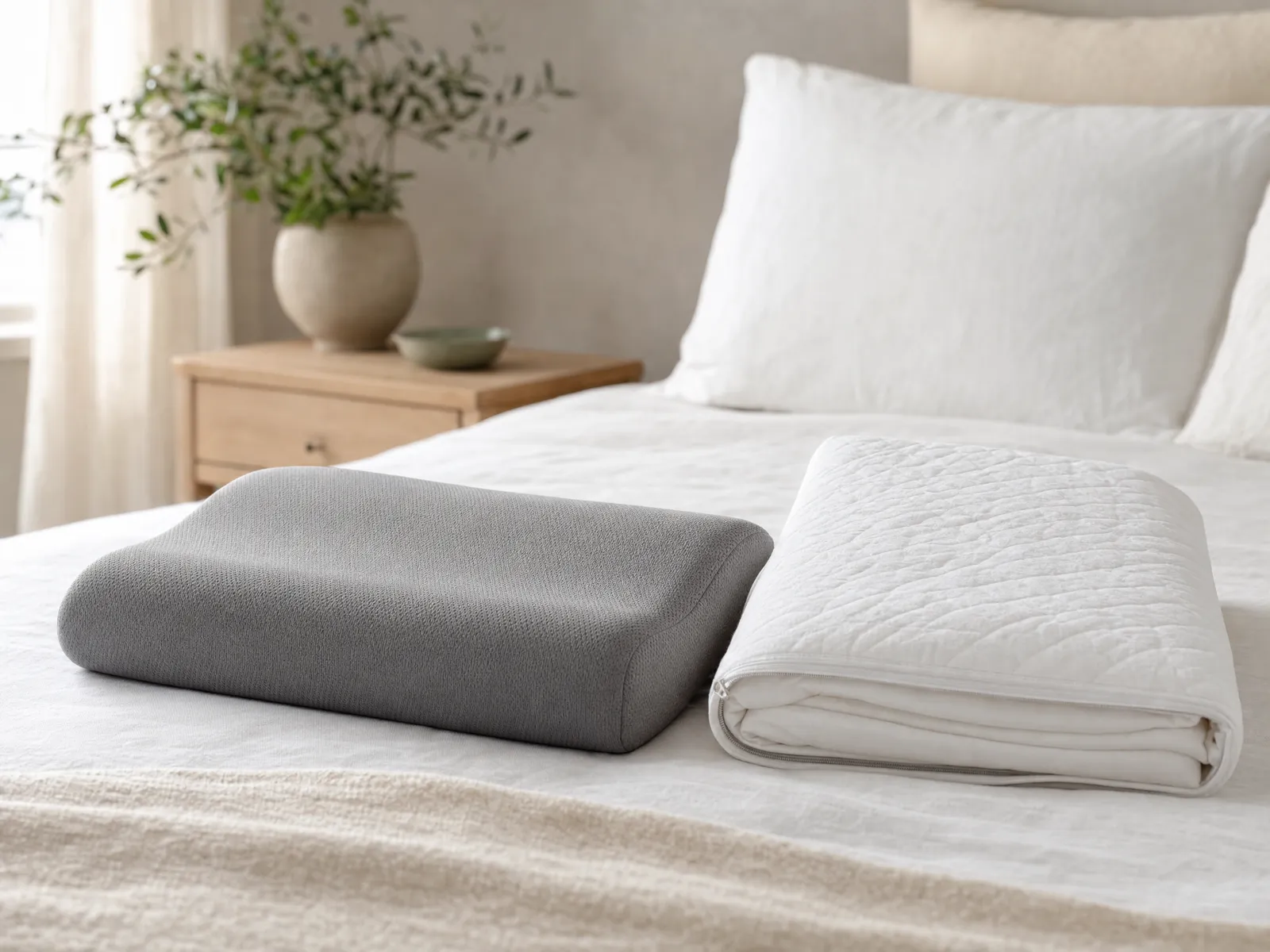
Our pick is the Cozyplayer Adjustable Cervical Pillow at $39.98 as of August 2026, because it changes height two ways — rotate it 180 degrees, or pull out the bottom insert — so several settings come out of one purchase. Cozyplayer also states a 15-degree tilt on its hollow centre and a cooling cover it says drops skin temperature by 5°C; both are the maker's own figures rather than anything we can verify.
If the budget matters more than the cooling cover, the CHxxy Dual-Height Contour Pillow is $30.49 as of August 2026 and offers three heights from one pillow. And the ROPU Contour Cervical Pillow at $26.99 as of August 2026 is the one for restless sleepers: a 5.3-inch side, a 3.7-inch side, and a 25.6 by 15.7-inch footprint the maker says leaves room to move without slipping off. Full specs for all three are in the cards on this page.
How to run the two-week test
This is the most useful part of the article, so here it is concretely.
- Set one height and leave it. Pick a starting height, sleep on it every night, and resist flipping the pillow on night four because you had a bad morning.
- Change nothing else. Not the mattress, not the caffeine, not the bedtime. One variable is the entire point; two variables tell you nothing.
- Give away the first three or four nights. A new contour pillow feels wrong before it feels right, and that adjustment period is not a result.
- Judge the first ten minutes after waking. Before coffee, before a shower, before you sit at a desk — that window is the cleanest signal you have about what the night did.
- Keep a two-line log. Date, neck 0 to 10, head 0 to 10, plus a few words on how you woke up. Fourteen entries in a phone note is enough.
- Then decide. If the pattern has shifted, keep the height and fine-tune. If fourteen mornings look identical to the fourteen before, stop shopping — the headaches are telling you to get them looked at.
When to stop experimenting and see someone
This is the one part of this article with no hedging in it.
Do not run a pillow experiment on a headache that is new, changing, or unlike your usual pattern, one that is severe or came on suddenly, one that wakes you from sleep, or one that follows a head or neck injury. See a doctor promptly.
The NHS advises calling 999 or going to an emergency department for a headache that started suddenly and is extremely painful, or that comes with numbness or weakness in the body or face, a seizure, loss of vision, difficulty speaking, walking, balancing or remembering things, drowsiness or confusion, a very high temperature or a stiff neck, or a rash that does not fade when a glass is rolled over it — or if there has been a head injury in the last three months. The NHS also lists headaches with vision or eye problems, vomiting, jaw pain when eating or a tender scalp, and headaches triggered by coughing, sneezing, bending or exercise as reasons to get urgent advice. Readers in the United States should use 911 and their local emergency department.
None of that is a pillow problem. Go.
The honest bottom line
If you wake with a stiff neck and an aching head, and the ache is one-sided, low at the back of the skull and worse when you turn your head, then your sleeping height is a cheap and reasonable thing to test. Buy an adjustable pillow, pick a height, hold everything else steady, log fourteen mornings, and let the log decide. That is the whole method: modest, testable, and honest about its own limits.
If the log says nothing changed, the fortnight was not wasted — you have ruled a variable out, which is exactly what a good test does, and that is worth telling a clinician. And if you want to go deeper on shape, fill and loft before you buy anything, our neck pain pillow guide is the place to start.
The shortlist
3 pillows compared — firmness, loft, and temperature side by side. The top pick is highlighted.
| Pillow | Firmness | Loft | Sleeps | Best for | Price |
|---|---|---|---|---|---|
Medium | Adjustable | Cooling | Waking with a tight neck and a dull head | $39.98 Check | |
Medium Firm | Adjustable | Cooling | Testing three heights without buying three pillows | $30.49 Check | |
Best BudgetROPU Contour Cervical Neck Pillow | Medium | Adjustable | Cooling | Restless sleepers who roll off smaller pillows | $26.99 Check |
Cozyplayer Adjustable Hollow-Center Cervical Pillow
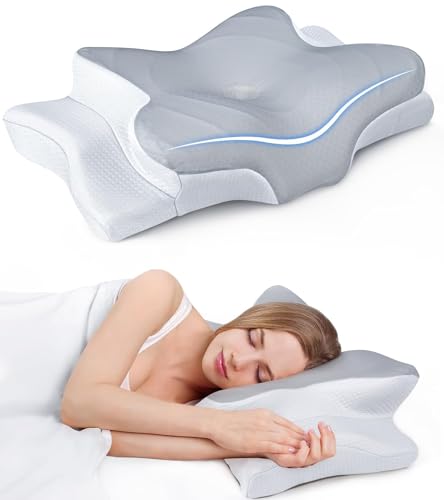
Rotating it gave me a lower side, which is what I ended up sleeping on, and my neck feels far less locked up in the first ten minutes after waking than it did on the flat pillow this replaced. The cover really does sleep cool.
It needed the full 48 hours of airing the maker recommends before the foam smell faded, and the contour is prescriptive — if you sleep on your stomach, this shape will fight you.
The Cozyplayer is our pick because it is the most tunable of the three, which is the point when you are testing a variable rather than committing to one. Height changes two ways: rotate the pillow 180 degrees, or remove the bottom insert. That is several genuinely different settings from one purchase. The shape is a hollow concave centre with what the maker describes as six contour zones supporting the neck, shoulders and arms and spreading pressure points.
Cozyplayer also states that the hollow centre is tilted at a 15-degree angle to hold the neck's natural curve, and that its Q-Max 0.4 Arc-Chill cover with a 3D mesh weave reduces skin temperature by 5°C. Both are the maker's own figures, not measurements we can verify. The core is 98% breathable memory foam, the pillow measures 23.2 x 13.4 x 5.1 inches, and there is a 100-night trial. The maker advises airing it out for 48 hours before first use.
CHxxy Dual-Height Contour Memory Foam Pillow

Three heights for thirty dollars is exactly why I bought it, and the lowest setting is the first pillow in a while that has not left my neck stiff by morning.
The raised massage points are more noticeable than the listing photos suggest, and the ice silk cover feels cool going to bed but does not stay cool through a whole warm night.
The CHxxy is the cheapest way we have found to test three heights. It uses a US-patented shape with a thickened neck contour, a hollowed centre and raised massage points. Rotating it 180 degrees swaps you between a higher and a lower contour, and a removable foam piece underneath adds a third height. For a fortnight-long experiment where the height is the thing you are changing, three settings from one purchase is the spec that matters.
The ice silk cover is one the maker says dissipates heat quickly; it is removable and machine washable, and the foam is CertiPUR-US and Oeko-Tex approved. One note on the marketing: CHxxy's own listing leans on the idea that the wrong pillow height contributes to headaches, neck and shoulder pain and snoring. That is the brand's framing rather than a clinical finding, and it is not why we included the pillow. Buy it for the three heights and the price.
ROPU Contour Cervical Neck Pillow

The size is the thing for me — I turn over constantly and this is the first contour pillow I have not ended up sleeping beside, and the lower side suits me on my back.
Two heights is less adjustable than the pillows with a removable insert, and the slow-rebound foam takes a moment to respond when you change position, which lighter sleepers may notice.
The ROPU is the budget pick, and the one built around size rather than adjustability. It gives you two heights in one pillow — a 5.3-inch side and a 3.7-inch side — which covers most of the gap between a side-sleeping loft and a back-sleeping one. What really sets it apart is footprint: 25.6 inches long by 15.7 inches wide, which the maker says leaves room to move without slipping off. If you have ever woken up next to a narrow cervical pillow rather than on it, that is the number to look at.
The contour is US-patented and the maker says it cradles the head and reduces pressure points. The fill is high-density slow-rebound memory foam, certified CertiPUR-US and Oeko-Tex Standard 100, and the breathable, hypoallergenic cover zips off for machine washing. Two heights is less flexible than the rotate-plus-insert designs above, but the two it offers are far enough apart to be a real comparison.
A Two-Week Pillow Experiment
If you want to know whether your pillow height is doing anything to your mornings, run it as an experiment rather than a shopping spree. Fourteen nights, one variable, a two-line log.
Neck Pain and Headaches FAQ
Will a pillow help my migraines? No, and we would rather say that plainly than sell you something. Migraine is a neurological condition — it is one of the disorders covered by the National Institute of Neurological Disorders and Stroke — and a pillow is not a treatment for it. If your headaches throb, come with nausea or sensitivity to light and sound, or are preceded by visual aura, the right next step is a clinician, not a purchase. A comfortable pillow is still worth having; it is just housekeeping rather than therapy.
How do I know whether my headache is coming from my neck? You cannot know that from an article, and anyone who tells you otherwise is guessing. The International Headache Society's criteria for cervicogenic headache require clinical or imaging evidence of a neck disorder plus evidence of causation, which is a doctor's job. What you can notice is the pattern: pain present on waking, often one-sided, often starting low at the base of the skull and travelling forward, with a stiff neck that turns badly.
How long should I give a new pillow before I judge it? Two weeks, with the first three or four nights discounted as an adjustment period. Less than that and you are measuring novelty; much more than that and you have stopped experimenting and started hoping.
Should I go higher or lower first? It depends on your position. Side sleepers usually need more height to fill the gap between ear and shoulder; back sleepers usually need less than they think, and stomach sleepers need the least of all. If you are unsure, start lower — an over-tall pillow that bends the neck forward all night is the more common complaint we hear.
Can a pillow stop me grinding my teeth? No. The Cleveland Clinic lists morning headaches and facial pain, sore jaw muscles and earaches among the symptoms of bruxism, and its advice is to tell a healthcare provider if those symptoms persist. Bruxism is usually diagnosed by a dentist. A pillow can make your neck more comfortable; it cannot change what your jaw does at 3am.
Is a contour pillow better than a regular one for this? Not automatically. A contour shape can make it easier to hold a neutral neck position, which is useful, but a contour at the wrong height is still the wrong height. Adjustability matters more than shape when you are testing.
Why you can trust us

Aimee Cannon
Sleep & bedding writer
Aimee Cannon is a sleep and bedding writer who has spent years testing pillows of every kind — memory foam, down, wool, bamboo, buckwheat, and specialty support pillows. She focuses on matching the right pillow to each sleeping position and need, and reports what actually holds up after months of nightly use. When she is not testing pillows, Aimee is usually with her husband and her dog.