Cervical vs Contour Pillows: What's the Difference?
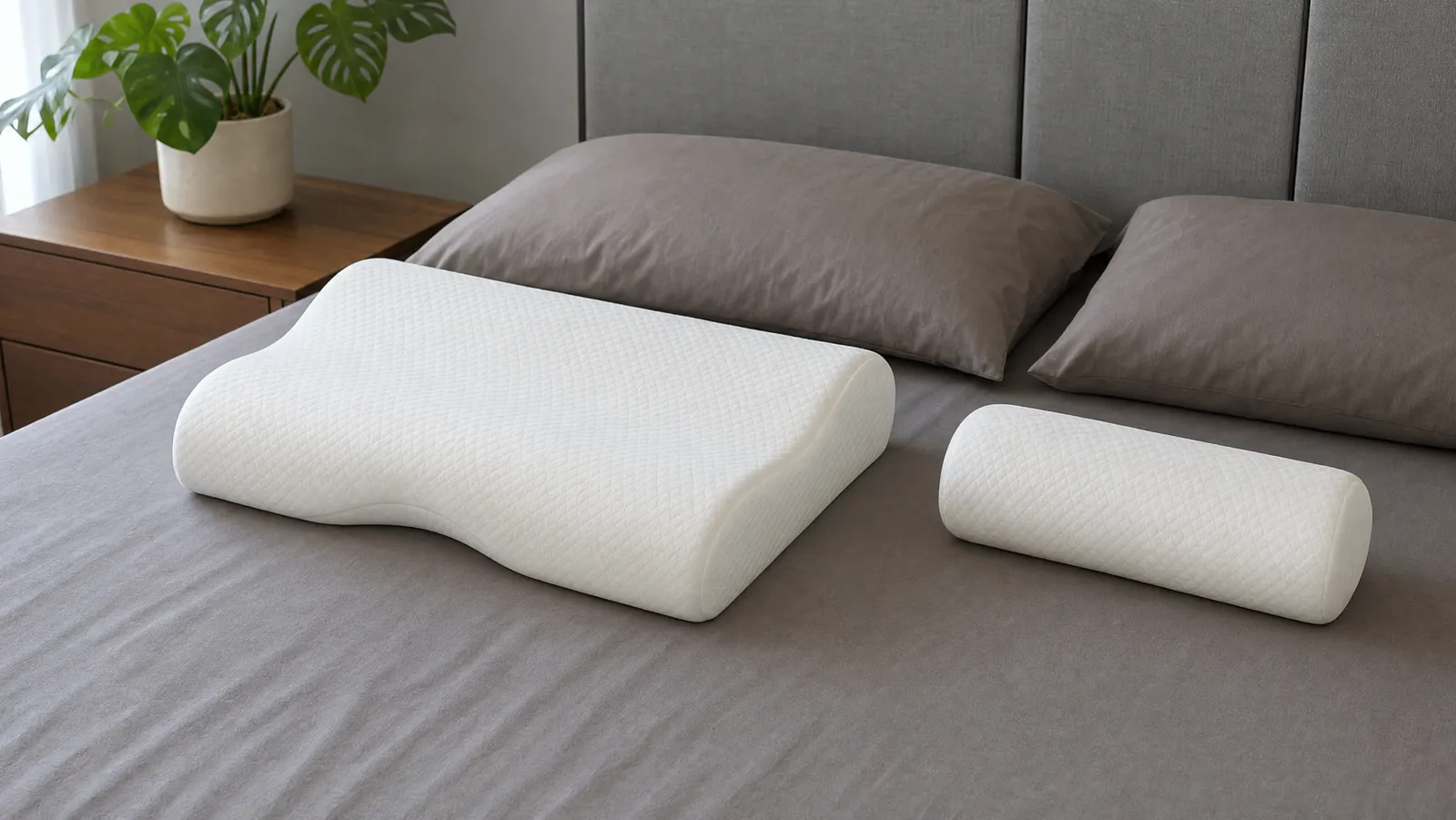
Open any shopping page for a neck-support pillow and count the labels: cervical, contour, orthopedic, ergonomic — sometimes all four stacked onto one product. Here is the untangling. A cervical pillow is the umbrella term for any pillow shaped to support your neck's natural curve. A contour pillow is the most common subset — the wave-shaped slab with a valley for your head and a raised ridge under your neck. We may earn a commission from links on this page, at no extra cost to you.
That one distinction resolves most of the confusion, but it leaves the practical questions: how each shape actually works, which sleepers each one suits, and whether the research supports any of it. We cover all of that below as part of our larger series on pillows for neck pain, where we hold every pillow style to the same alignment standard. One plain caveat before we start: if your neck pain is severe, persistent, follows an injury, or comes with numbness, weakness, or pain radiating down an arm, see a clinician first — no pillow is a substitute for a diagnosis.
Cervical Pillow vs Contour Pillow: The Short Answer
Think squares and rectangles. Every contour pillow is a cervical pillow; not every cervical pillow is a contour pillow.
- Cervical pillow means any pillow designed to keep the cervical spine — the seven vertebrae in your neck — in its natural, gently curved position while you sleep. The category includes molded slabs, curved adjustable-fill designs, and even a plain 3.5-inch-diameter foam roll you tuck under your neck.
- Contour pillow means the specific wave-shaped design: a rectangular slab, usually molded foam, with a scooped valley in the middle for the back of your head and one or two raised ridges along the edges to support your neck.
So when a listing says "cervical contour pillow," it is being redundant, not describing a third product. And when two listings call the same wave-shaped slab "cervical" and "contour," they are describing the same pillow at two levels of specificity.
Why does neck-first shaping matter at all? According to the Cleveland Clinic, a good pillow should keep your neck parallel to the mattress rather than flexed up or tilted down — and the wrong pillow can reinforce poor posture and aggravate an already sore neck. Every cervical pillow, whatever its shape, is an attempt to engineer that parallel position instead of leaving it to chance.
What Counts as a Cervical Pillow?
Because "cervical" describes a goal rather than a shape, the category is broader than most shoppers expect. At one end sit the fully shaped designs: molded contours, curved pillows with adjustable fill, water-based pillows. At the other end sits the humblest member of the family — the cervical roll, a simple firm cylinder that does exactly one job.
The roll deserves more respect than its looks earn it. Harvard Health suggests that back sleepers can support the neck's natural curve by tucking a small neck roll into the pillowcase of a flatter, softer pillow — which is precisely how a cervical roll is meant to be used. The best-known example, the Original McKenzie Cervical Roll, was developed by New Zealand physical therapist Robin McKenzie, whose Treat Your Own Neck — first published in 1983, according to the McKenzie Institute — helped make the neck roll a fixture of physical therapy practice. A roll does not replace your pillow; it upgrades it.
That breadth is worth remembering when you shop: a search for a cervical pillow for neck pain will surface sub-30-dollar rolls and pricier molded slabs side by side, and they are not interchangeable. They solve the same alignment problem from opposite directions.
What Is a Contour Pillow, Exactly?
The contour is the shape most people picture when they hear "cervical pillow": a wave-profile slab with a valley that cradles the back of your skull and a raised ridge that fills the gap between your neck and the mattress. Most contours put a different ridge height on each long edge — a taller side and a shorter side — so one pillow can serve side sleeping and back sleeping.
Almost every contour pillow is molded from a single slab of slow-response foam, which is why the category overlaps so heavily with memory foam pillows: molded memory foam is what lets the wave shape hold its geometry night after night instead of flattening like fiberfill. That material choice has real consequences. The shape stays put, but it also cannot be fluffed, folded, or scrunched — the geometry you buy is the geometry you sleep on.
The evidence on contoured designs is cautiously encouraging. A 2021 systematic review in the European Journal of Integrative Medicine found moderate evidence that a contoured design, a pillow height of roughly 7 to 11 centimeters (about 2.8 to 4.3 inches), latex material, and a cooling surface were associated with better sleep quality, better spinal alignment, and less sleep-related pain. That is support for the concept — not a guarantee for any particular pillow.
Orthopedic and Ergonomic Are Marketing, Not Categories
Here is the part that saves you the most squinting at product pages: "orthopedic" and "ergonomic" are not regulated product categories. No standards body certifies a pillow as orthopedic, and no measurement makes a pillow officially ergonomic. When a listing calls itself an orthopedic pillow or an ergonomic pillow for neck pain, it is telling you the maker's intent — support-focused design — not reporting a credential.
That does not make the words meaningless; a pillow labeled ergonomic is usually some kind of cervical design. It means the label cannot do your comparison shopping for you. Ignore the adjective, and ask the two questions that actually differentiate products: what is the shape, and what are the measurements?
Which Shape Suits Which Sleeper?
The two shapes are not competitors so much as different levels of commitment.
- Choose a cervical roll if you like your current pillow. The roll pairs with what you own, costs less than most molded pillows, and is the cheapest way to test whether targeted neck support helps you at all. It is also the natural fit for back sleepers, per Harvard Health's neck-roll advice above.
- Choose a contour pillow if your current pillow is part of the problem. A contour is a full replacement that fixes head height and neck support in one molded piece, and it gives side and back sleepers a defined ridge to settle into.
- Side sleepers usually need the taller ridge. Your shoulder props your head farther from the mattress, so the ridge has to bridge that distance; a ridge sized for back sleeping will leave a side sleeper's head tilted downward. Getting this measurement right matters more than any label on the box — our dedicated guide to pillow height for neck pain shows you how to find your number.
- Stomach sleepers should be cautious with both. Harvard Health notes that stomach sleeping is tough on the spine because the back arches and the neck turns to the side — and most contour makers design primarily for back and side sleeping.
What the Research Says About Cervical Pillows for Neck Pain
We would love to tell you the science is settled. It is not, and you should distrust any pillow page that pretends otherwise.
An evidence review indexed in the National Institutes of Health's Database of Abstracts of Reviews of Effects concluded there was insufficient evidence to determine whether cervical pillows reduce chronic neck pain. More recently, a 2025 systematic review of pillow interventions for chronic neck pain found only minor pain improvements and no statistically significant difference in sleep quality across the included studies. Set against that, the 2021 European Journal of Integrative Medicine review cited earlier found moderate evidence favoring specific features — contoured shape, the right height, cooling surfaces — for sleep quality and alignment.
The honest synthesis: a well-fitted cervical pillow may help, particularly with comfort and sleep quality, but it is not a treatment. Research suggests the fit — height and shape matched to your sleeping position — matters more than the category name on the box. Many people find the upgrade worthwhile; nobody should expect it to cure anything, and persistent pain belongs in front of a clinician, not a checkout page.
The Adjustment Period, and Other Honest Downsides
Neither shape is a free lunch, and we would rather you know before buying.
Contour pillows genuinely take getting used to. The molded valley-and-ridge restricts how you drape yourself across the pillow, and the first nights commonly feel strange, even wrong. Makers and sleep retailers typically suggest allowing one to two weeks of consistent use before judging. The other structural weakness is fixed geometry: if the ridge is half an inch too tall or too short for your frame, a solid molded pillow offers no remedy short of returning it.
Cervical rolls do nothing for your head. A roll supports the curve of your neck and stops there — your head's height and comfort still depend entirely on the pillow you pair it with. A roll under a bad pillow is still a bad setup.
Hybrids trade certainty for tinkering. Curved pillows with adjustable fill can be tuned to your build, but tuning is trial and error, and shredded fill needs occasional fluffing to stay even.
Our Pick for Each Shape
The full product details are in the cards below, but the three picks map exactly onto the three answers to this article's question.
For the classic contour, the Bespillow Contour Cervical Pillow — 35.99 dollars as of July 2026 — is our existing top pick for side sleepers with neck pain, with a 5.5-inch ridge for side sleeping and a 3.7-inch ridge for back sleeping on the flip side. For the classic cervical roll, the OPTP Original McKenzie Cervical Roll — 28.99 dollars as of July 2026 — is the physical-therapy standard that upgrades the pillow you already own. And for sleepers stuck between the two, the Sidney Sleep Adjustable Curved Pillow — 39.98 dollars as of July 2026 — keeps the contour outline but lets you add or remove shredded fill until the height fits.
If you have decided the shape is right and you just want the shortlist, our roundup of the best cervical pillows for neck support compares five of them on ridge height, certification and the limitations each one carries.
The Bottom Line
"Cervical" is the family; "contour" is its most popular member; "orthopedic" and "ergonomic" are adjectives, not products. If you like your current pillow, a 3.5-inch cervical roll is the cheapest experiment in sleep gear. If your pillow is the problem, a contour — sized to your sleeping position, with a taller ridge for side sleepers — replaces it outright, provided you give the shape a week or two to stop feeling foreign. Either way, buy on shape and measurements, never on labels.
For how these shapes compare against wedges, down, latex, and everything else we have slept on, start with our neck pain pillow guide — and if pain persists no matter what is under your head, that is a conversation for a clinician, not a cart.
The shortlist
3 pillows compared — firmness, loft, and temperature side by side. The top pick is highlighted.
| Pillow | Firmness | Loft | Sleeps | Best for | Price |
|---|---|---|---|---|---|
Best ContourBespillow Contour Cervical Pillow | Medium Firm | Adjustable | Cooling | Side sleepers | $35.99 Check |
Best Cervical RollOPTP The Original McKenzie Cervical Roll | Firm | Low | Neutral | Adding neck support to your own pillow | $28.99 Check |
Medium | Adjustable | Neutral | Contour shape, tunable fill | $39.98 Check |
Bespillow Contour Cervical Pillow

Sleeping on the 5.5-inch side kept my shoulder from crumpling into the mattress, and after the first week my mornings were noticeably less stiff than they were on my old flat pillow.
The molded shape took several nights to get used to, and if neither the 5.5-inch nor the 3.7-inch ridge happens to match your build, there is no way to fine-tune the height.
The Bespillow is the classic contour shape done properly, and it remains our top pick for side sleepers with neck pain. Its US-patented contoured profile cradles the head in a central valley while a raised ridge supports the neck's curve, and the smart part is the two-height design: rotate the pillow 180 degrees and you switch between a 5.5-inch ridge for side sleeping and a 3.7-inch ridge for back and stomach sleeping.
The memory foam is CertiPUR-US and Oeko-Tex certified, with a stated 3-to-5 second rebound — slow enough to contour to you, quick enough that you do not feel stuck in a dent. It ships with an ice silk cooling pillowcase in a breathable fiber fabric, and the removable cover is machine washable; the maker recommends cleaning it monthly. If you want the textbook contour experience, this is it.
OPTP The Original McKenzie Cervical Roll

I slipped it inside the pillowcase of the pillow I already loved, and the unsupported gap under my neck disappeared the first night — no new pillow required.
It is only a neck roll, so it does nothing for your head; if the pillow you pair it with is the wrong height, the roll cannot rescue it, and the firm foam takes a few nights of adjustment.
This is not a pillow you sleep on by itself. It is a firm foam cylinder — 20 inches long and 3.5 inches in diameter — designed to slip inside your pillowcase or pair with the pillow you already own, filling the hollow between your neck and the mattress. It was developed by physical therapist Robin McKenzie, author of Treat Your Own Neck and developer of the Original McKenzie neck and lumbar rolls, which is why it is the roll physical therapy patients are most likely to recognize.
OPTP describes the foam as firm enough to support the neck but with slight give, and positions it for back or side sleeping and for people dealing with neck pain, stiffness, back pain, or shoulder and arm pain. The cover is removable and washable, and the roll is made in the USA.
Sidney Sleep Adjustable Curved Pillow (Queen)
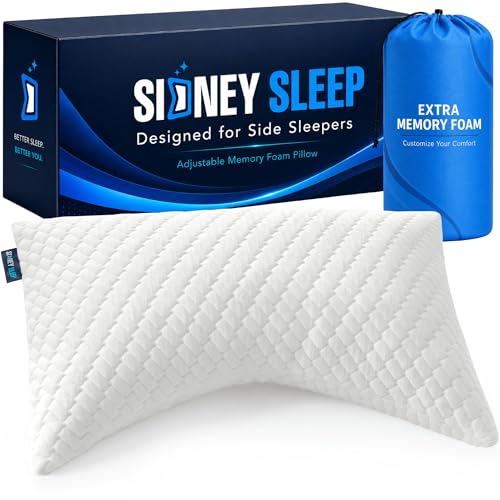
I pulled out about a third of the fill during the first week, and ended up with the contour shape I wanted without the solid-slab feel that made me return my last molded pillow.
Dialing in the fill is genuinely trial and error — expect a few nights of adding and removing foam — and like any shredded-fill pillow it benefits from an occasional fluff to keep the shape even.
The Sidney Sleep is for anyone stuck between shapes. It keeps the curved cervical-contour outline — higher under the neck, lower under the head — but swaps the solid molded slab for shredded fill you can add or remove to change both firmness and loft, and an extra bag of fill comes in the box. That fixes the biggest complaint about classic contours: the geometry you buy is no longer the geometry you are stuck with.
The foam is CertiPUR-US certified, and the queen size measures 19 by 29 inches, so it looks like a normal pillow on the bed. The plush outer cover is removable, machine washable, and quick-drying, and the maker describes the fabric as cool against the skin and says the shredded fill resists flattening, sagging, and clumping. Sidney Sleep positions it for side and back sleepers who want the head, neck, and shoulders kept in line.
Cervical, Contour, Orthopedic, Ergonomic: A Glossary
Cervical Pillow FAQ
Is a cervical pillow the same as a contour pillow? Not exactly. Every contour pillow is a cervical pillow, but not every cervical pillow is a contour pillow. "Cervical" covers any neck-supporting shape, including plain cylindrical rolls; "contour" is the specific wave-shaped design with a valley for the head.
Do cervical pillows actually help neck pain? The evidence is mixed. Some reviews report moderate evidence of benefit with contoured designs of the right height, while others find no statistically significant difference — so a well-fitted cervical pillow may help, but it is best treated as a comfort upgrade and a complement to care, not a treatment.
How long does it take to get used to a contour pillow? Makers and sleep retailers commonly suggest allowing one to two weeks. The molded shape restricts how you drape across the pillow, and most people need several nights before it stops feeling strange.
Can I use a cervical roll with the pillow I already own? Yes — that is the entire point of a roll. It slips inside your pillowcase or sits under your pillow's bottom edge to fill the hollow beneath your neck, so you keep the pillow you like and add support underneath.
Which ridge of a contour pillow should face up? The taller ridge generally suits side sleeping, because your shoulder holds your head farther from the mattress; the shorter ridge suits back sleeping. Two-height designs exist precisely so you can flip between them.
When should I see a doctor instead of buying a pillow? If neck pain is severe, lasts more than a few weeks, follows an accident or injury, or comes with numbness, weakness, or pain radiating down an arm, see a clinician before spending money on bedding.
Why you can trust us

Aimee Cannon
Sleep & bedding writer
Aimee Cannon is a sleep and bedding writer who has spent years testing pillows of every kind — memory foam, down, wool, bamboo, buckwheat, and specialty support pillows. She focuses on matching the right pillow to each sleeping position and need, and reports what actually holds up after months of nightly use. When she is not testing pillows, Aimee is usually with her husband and her dog.